
Best Color Grading Studio in Kochi: What to Look For Before You Hire
Your footage is shot, the edit is locked, and now the difference between a project that looks "fine" and one that looks cinematic comes down to one decision: who you hire to grade it. The best color grading studio in Kochi is the one that matches your project's format and budget,
By Studio Hue
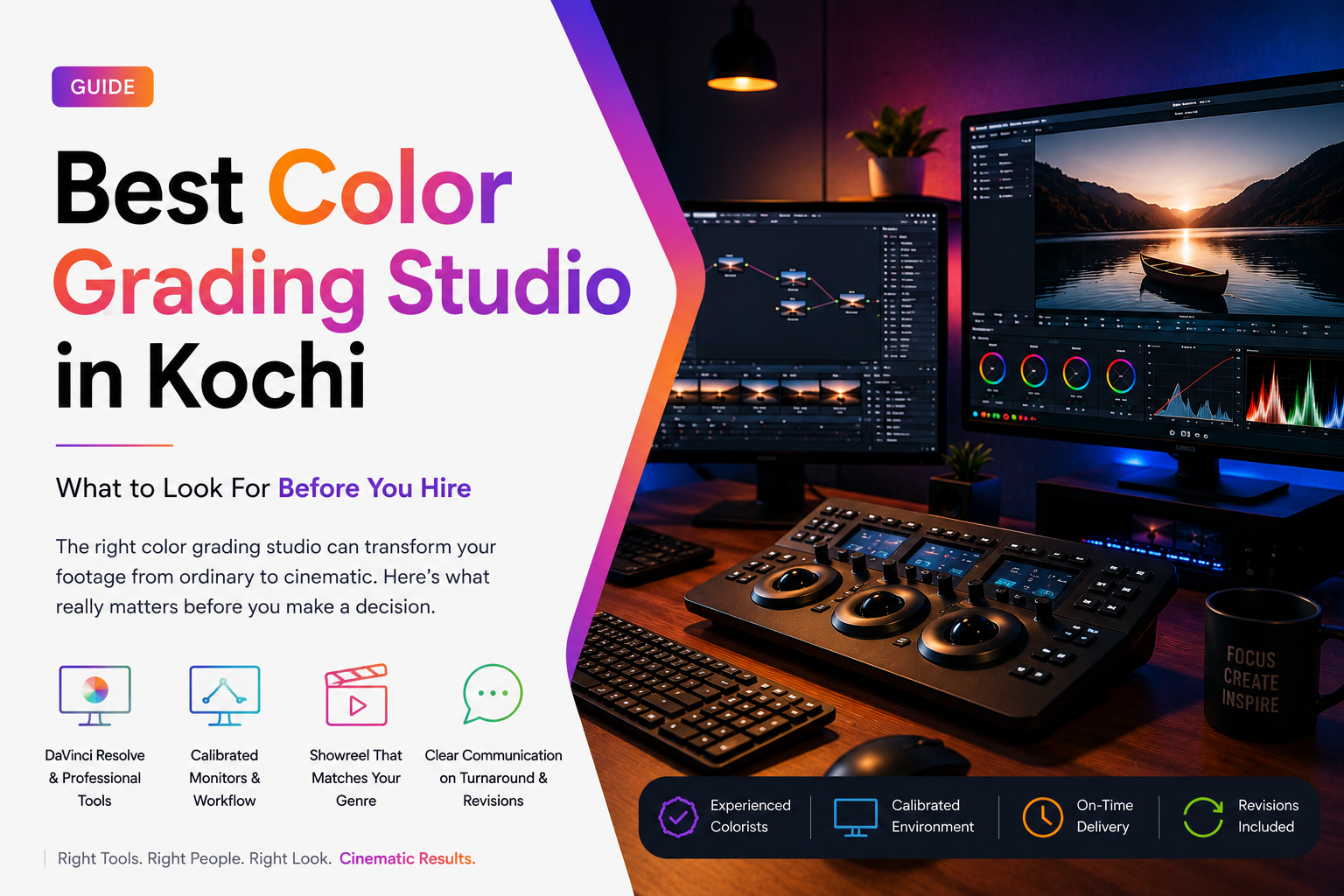
Your footage is shot, the edit is locked, and now the difference between a project that looks "fine" and one that looks cinematic comes down to one decision: who you hire to grade it. The best color grading studio in Kochi is the one that matches your project's format and budget, works on professional tools like DaVinci Resolve with calibrated monitors, and can show a genuine showreel in your genre. Strong studios also communicate clearly on turnaround time and revisions. Evaluate a studio on these factors not on price alone before you hire.
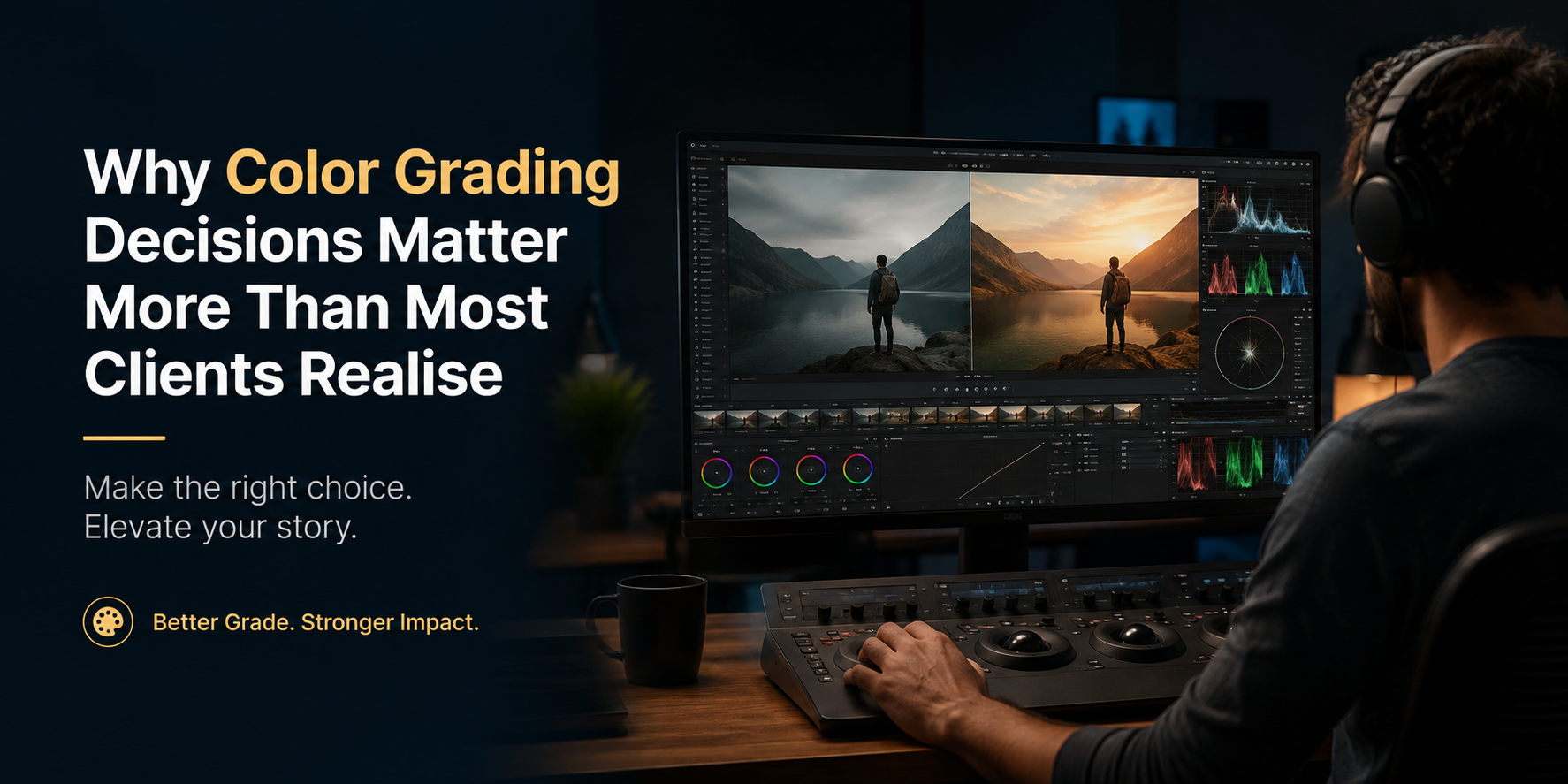
Why Color Grading Decisions Matter More Than Most Clients Realise
Colour grading shapes the emotional tone of a film, ad, or corporate video. A skilled colourist can rescue footage shot in mixed or difficult lighting, and a weak one can flatten even well-shot material. Kochi's production scene has grown quickly, spanning Malayalam cinema, independent shorts, corporate content, wedding films, and OTT deliverables. That growth means more studios are competing for the same clients, which makes vetting a studio properly more important than ever.
What Color Grading Actually Involves
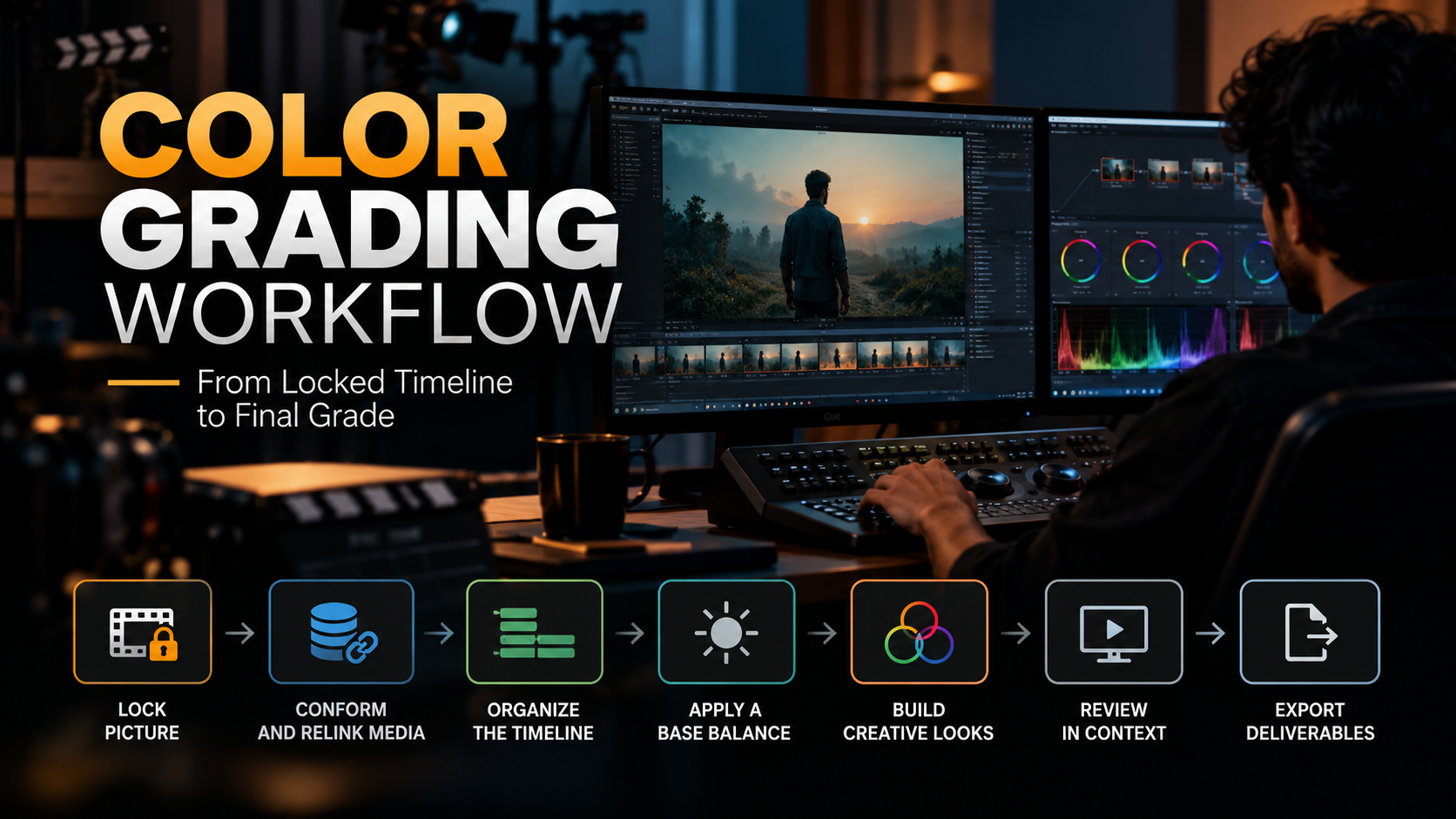
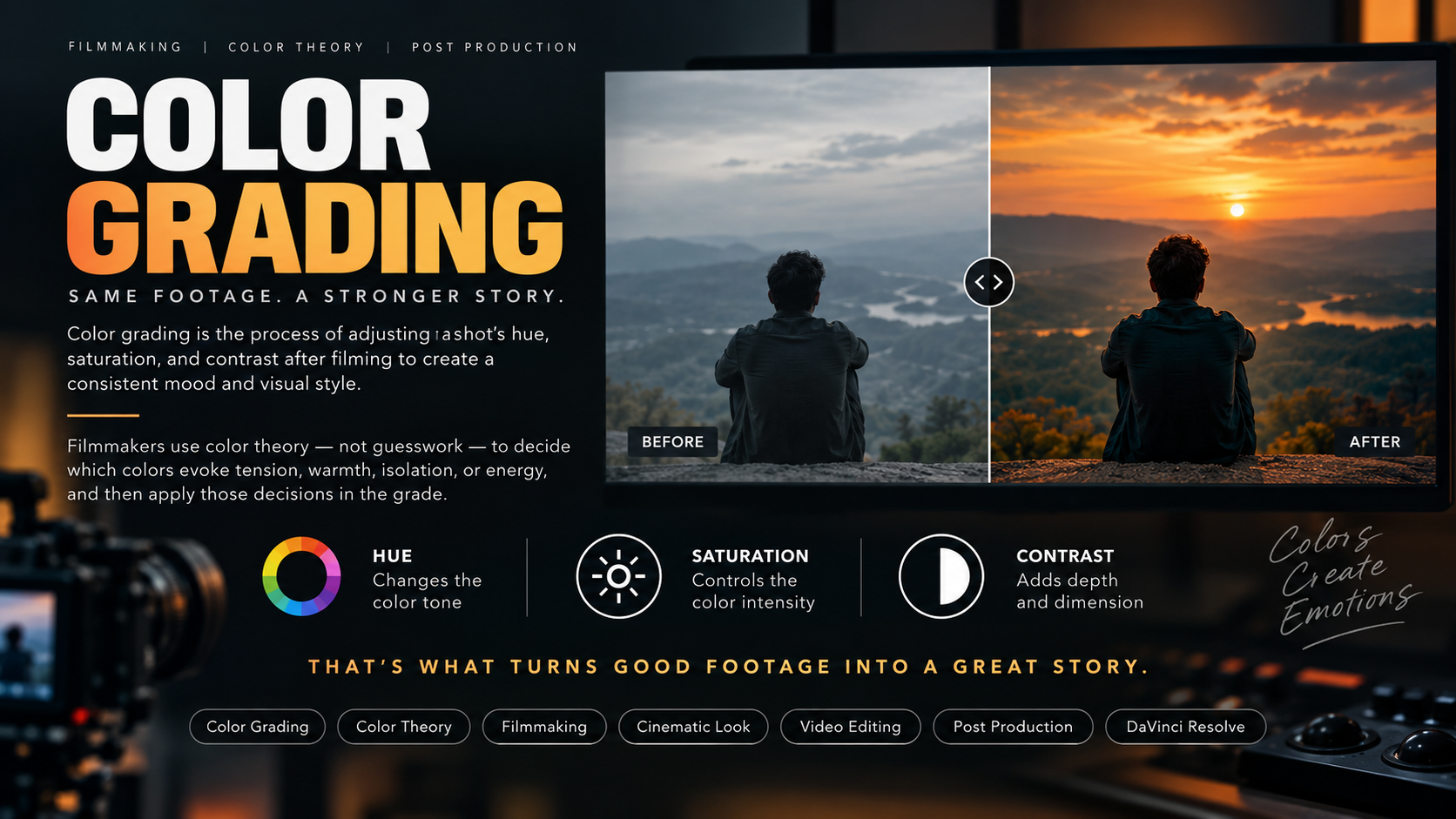
Color grading is a distinct post-production stage that comes after color correction. Color correction fixes technical issues like white balance and exposure. Color grading builds a deliberate visual style a "look" on top of a technically clean image. A professional colorist uses tools such as DaVinci Resolve, LUTs (Look-Up Tables), and calibrated reference monitors to make these decisions. This distinction matters when you're comparing studios, since some vendors only offer basic correction and market it as full grading.
7 Things to Look For Before You Hire a Color Grading Studio in Kochi
1. A Show Reel in Your Specific Genre
A studio's general showreel tells you less than footage from projects similar to yours. A colourist skilled at moody feature-film grading won't necessarily be the right fit for a bright, high-key ad campaign or a wedding film. Ask to see full projects, not just highlight reels, so you can judge consistency across an entire piece rather than a handful of polished frames.
2. Professional Software and Calibrated Hardware
Industry-standard studios grade on tools like DaVinci Resolve Studio, using color-calibrated reference monitors rather than consumer displays. This setup ensures the grade looks correct across cinema screens, broadcast, and OTT platforms not just on the colorist's laptop. Ask directly what software and monitor calibration the studio uses. A studio that can't answer this clearly is a signal to keep looking.
3. Turnaround Time That Matches Your Deadline
Grading timelines vary widely depending on project length and complexity. A 90-second ad might take a day; a feature film can take weeks. Get a written estimate tied to your specific project, not a generic promise of "fast delivery."
4. A Clear Revision and Communication Process
Ask how many rounds of revisions are included, and how feedback is exchanged in person, over remote review sessions, or through shared online review links. Studios that define this upfront tend to have fewer surprises mid-project.
5. Transparent Pricing Structure
Pricing in the Kochi market varies based on project length, complexity, and delivery format. Ask whether the studio charges per minute, per project, or per day, and whether revisions beyond the agreed rounds cost extra.
6. Experience With Your Delivery Format
Grading for cinema DCP, OTT streaming, broadcast, and social media each carries different technical requirements including different color spaces and delivery specs. A studio experienced only in one format may not correctly master deliverables for another.
7. Verifiable Client Testimonials and Past Work
Look for reviews or references you can actually verify, not just quotes on a website. Reach out to a past client directly if possible, especially for a large or high-stakes project.
Questions to Ask Before You Sign On
- What software and color-calibrated monitors do you grade on?
- Can I see a full project in a genre similar to mine, not just a reel?
- What's the realistic turnaround time for a project like mine?
- How many revision rounds are included, and what happens after that?
- How is pricing structured, and what could add extra cost?
- Do you have experience delivering for [my specific format - OTT, cinema, broadcast, social?
Red Flags That Signal You Should Look Elsewhere
- Vague or evasive answers about software, workflow, or pricing- No previous full-length project available to review, only short clips- No calibrated monitor setup, or grading done entirely on a laptop screen- Pressure to sign before you've seen comparable past work- No clear revision policy in writing
Choosing a Studio Based on Your Project Type
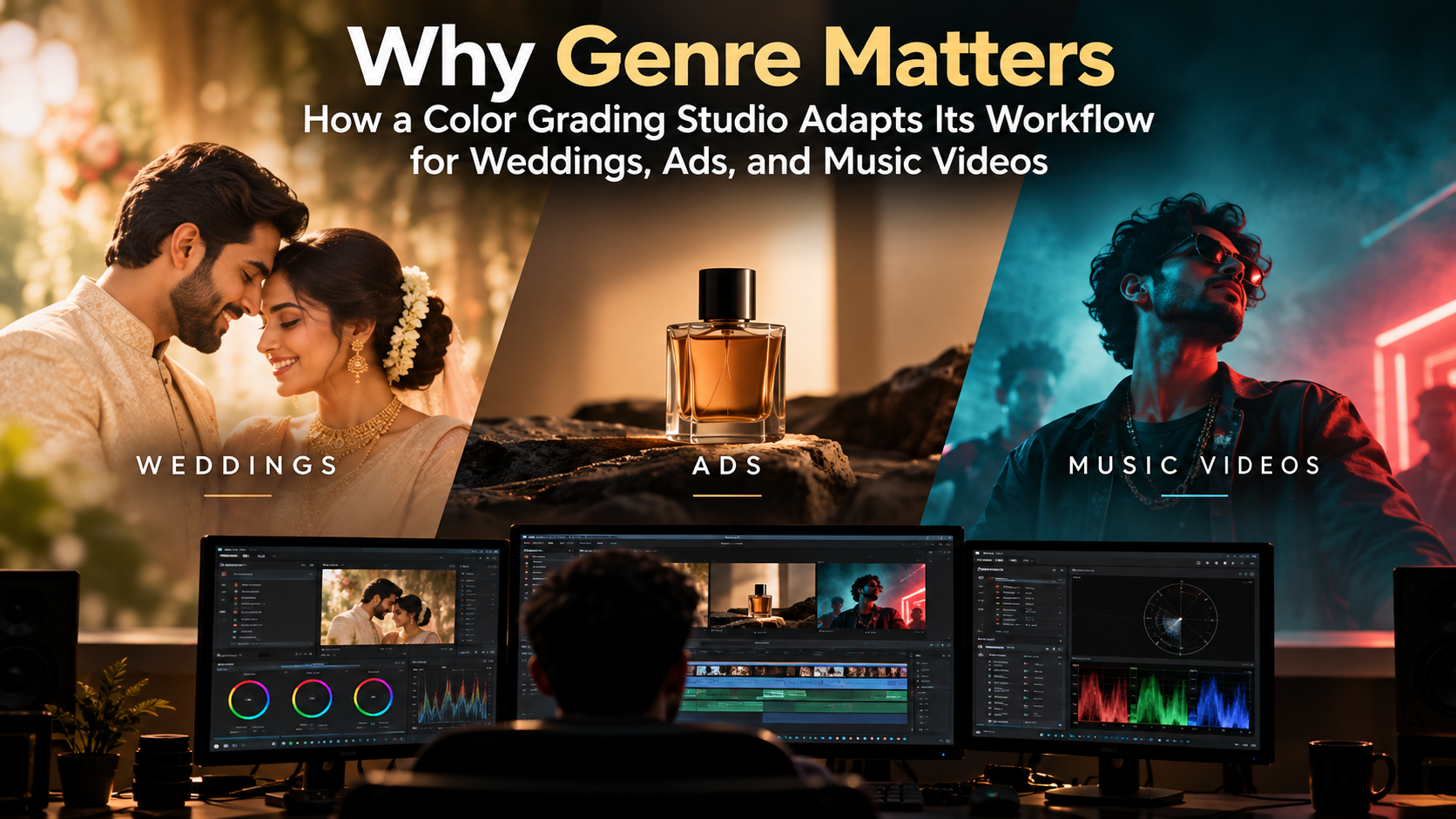
For independent filmmakers: priorities a colorist who understands narrative pacing and can maintain a consistent look across an entire feature or short, not just standout scenes.
For ad agencies and brands: priorities turnaround speed, brand-color consistency across multiple deliverables, and a studio comfortable working directly with client stakeholders on revisions.
For wedding and event videographers: priorities a studio that can handle high volume efficiently while keeping skin tones natural and consistent across mixed lighting conditions from a single shoot day.
Frequently Asked Questions
How much does color grading cost in Kochi? Pricing depends on project length, complexity, and delivery format, and varies significantly between studios. Ask for a written quote based on your specific project rather than relying on a general price range, since per-minute and per-project pricing models differ widely across vendors.
How long does color grading take for a short film or ad? A short ad can often be graded within a day or two, while a short film or feature typically takes longer depending on scene count and complexity. Always confirm a realistic, project-specific timeline in writing before work begins, rather than assuming a standard turnaround.
Can color grading fix bad lighting or exposure mistakes? Color grading can improve many exposure and white-balance issues, especially when footage was shot in a flat or log profile. However, severely underexposed, overexposed, or out-of-focus footage has limits that grading alone cannot fully correct, so getting the shoot right remains important.
Is DaVinci Resolve the industry standard for color grading? DaVinci Resolve Studio is widely used by professional colorists for its color-management tools and calibration support. Some studios also use other professional-grade systems, so the specific software matters less than whether the studio's monitors are properly color-calibrated for accurate results.