
Why Genre Matters: How a Color Grading Studio Adapts Its Workflow for Weddings, Ads, and Music Videos
Not every project should look the same coming out of the grade. A wedding film, a 30-second commercial, and a music video all carry different emotional goals, delivery formats, and client expectations  which means a professional color grading studio builds a distinct wor
By Hasna Nambiyarakath
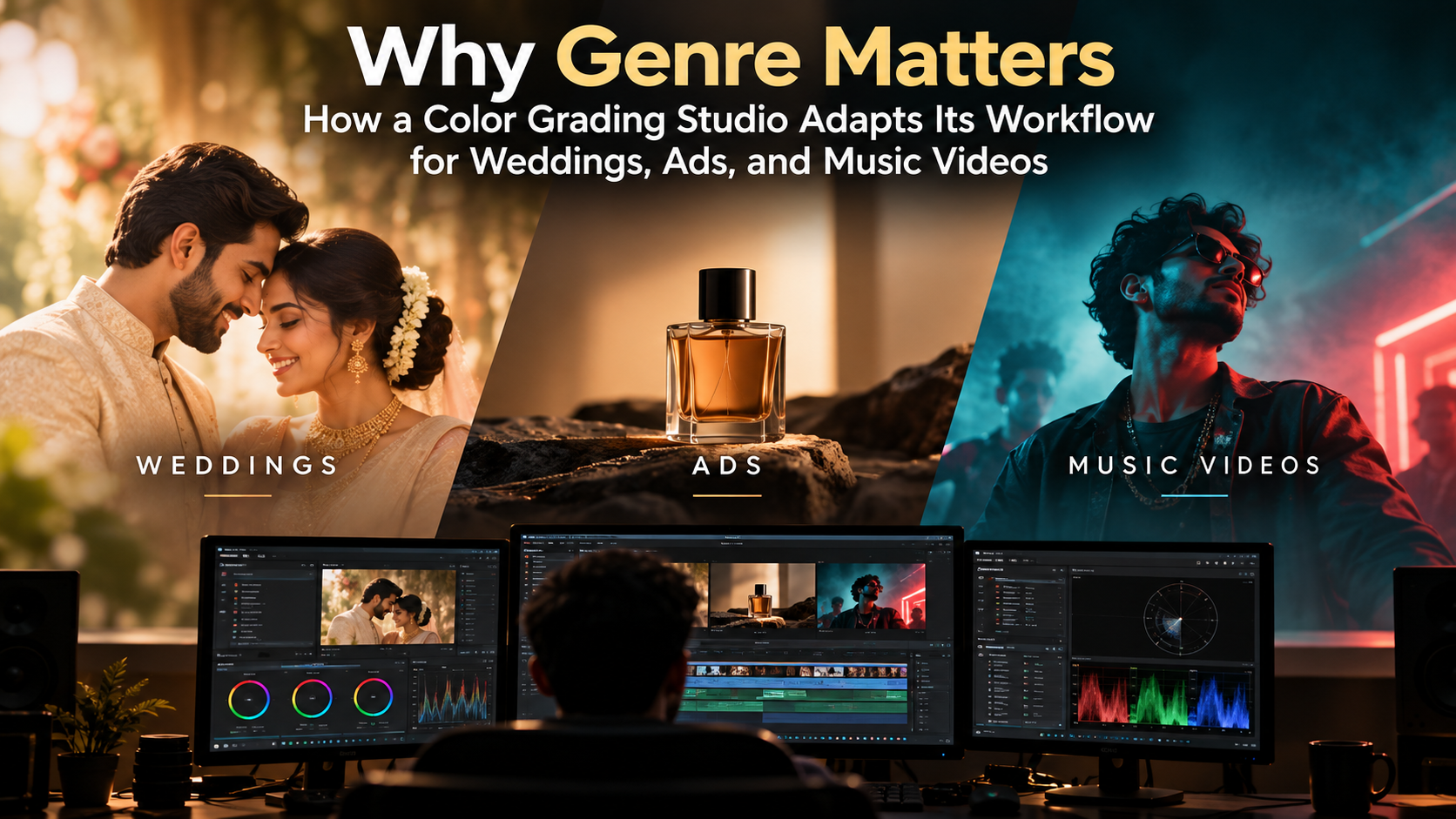
Not every project should look the same coming out of the grade. A wedding film, a 30-second commercial, and a music video all carry different emotional goals, delivery formats, and client expectations which means a professional color grading studio builds a distinct workflow for each genre rather than applying one universal preset. The right approach depends on story intent, turnaround time, and where the final piece will be viewed.
What Does a Color Grading Studio Actually Change Between Genres?
A color grading studio adjusts its process across several dimensions when moving between genres: the emotional tone of the grade (warm and timeless vs. bold and stylized), the technical delivery specs (broadcast-safe levels vs. social-first exports), the turnaround expectations, and how much creative latitude the client typically wants. Weddings favor consistency and skin tone accuracy; commercials favor brand alignment; music videos favor experimentation.
Weddings: Consistency, Skin Tones, and Timeless Color
Wedding content is judged over years, not weeks. A couple will revisit their film for anniversaries and family milestones, so a color grading studio working in this genre prioritizes:
- Accurate, flattering skin tones across mixed lighting indoor receptions, golden-hour ceremonies, and low-light dance floors all in one edit
- Shot-to-shot consistency across multiple cameras and operators shooting the same day
- A timeless palette rather than trend-driven looks, since heavy stylization can date a film quickly
- Efficient batch workflows, since wedding studios often deliver dozens of hours of footage per season
The creative brief here is usually narrow: enhance, don't reinvent. Clients want the day to feel the way it actually looked just cleaner and more polished.
Commercials: Brand Consistency and Precision
Advertising work flips the priority. A color grading studio handling commercial projects is grading to a brand guideline, not just a scene. That means:
- Matching brand color codes precisely a soft drink's red or a tech brand's blue often has exact spec sheets
- Broadcast and platform compliance, since specs differ between TV, YouTube pre-roll, and social cuts of the same ad
- Fast revision cycles, often with multiple stakeholders (client, agency, director) reviewing and requesting changes
- A polished, commercial sheen clean, high-contrast, saturated in ways that read well at 15 or 30 seconds
Here, the grade often has to survive committee approval, so documentation and revision tracking matter as much as the look itself.
Music Videos: Creative Risk and Stylization
Music videos are where a color grading studio typically has the most creative freedom. The workflow shifts toward:
- Bold, genre-appropriate looks heavy contrast, color splits, film emulation, or surreal palettes depending on the track's tone
- Sync-driven pacing, grading cuts to match rhythm and mood shifts within the song
- Experimental techniques like selective color isolation, day-for-night conversions, or intentional grain and halation
- Artist and label input, balancing the director's vision with the artist's brand identity
Unlike weddings or ads, there's often no safe default the studio is expected to propose a distinct visual identity.
Why This Matters When Choosing a Color Grading Studio
Choosing a color grading studio based on genre experience not just general skill matters because the workflows, client expectations, and technical deliverables genuinely differ. A studio that only grades weddings may not have the brand-matching discipline commercials demand. A studio built for music video experimentation may over-stylize a wedding film. Ask any prospective studio to show genre-specific reels, not just a general showreel.
Frequently Asked Questions
Does a color grading studio use different software for different genres?
Not usually most professional studios use the same core tools (DaVinci Resolve, Base-light, etc.) across genres. What changes is the workflow: LUV/LUT choices, node structure, turnaround process, and revision workflow are tailored to the genre's needs rather than the software itself.
How long does color grading typically take for each genre?
Wedding grading is often batch-processed and can take a few days per project due to volume. Commercials usually move faster (24-72 hours) due to campaign deadlines but involve more revision rounds. Music videos vary widely, from a single day to over a week, depending on the complexity of the creative look.
Can one color grading studio handle all three genres well?
Yes, but it requires distinct internal workflows and colorists comfortable switching creative approaches. When evaluating a studio, ask for genre-specific examples rather than assuming general color expertise transfers evenly across weddings, ads, and music videos.
What should I look for in a color grading studio's portfolio?
Look for consistency within each genre category rather than one universal style across everything. A strong portfolio shows adaptability timeless tones for weddings, brand-accurate grades for commercials, and bold creative risks for music videos.